Japandi Kitchen Design
If you like your kitchens calm, uncluttered and quietly beautiful, Japandi design might just be your perfect match. A thoughtful fusion of Japanese and Scandinavian interior styles, Japandi kitchens are all about simplicity, natural materials and spaces that feel as good as they look.
What is Japandi kitchen design?
Japandi blends the best of two worlds. From Japanese design comes a love of minimalism, craftsmanship and balance. From Scandinavian interiors comes warmth, light and comfort. Together, they create kitchens that feel serene yet welcoming, practical yet deeply stylish.
The result is a space that encourages slower living, mindful design choices and a real appreciation for quality over quantity.
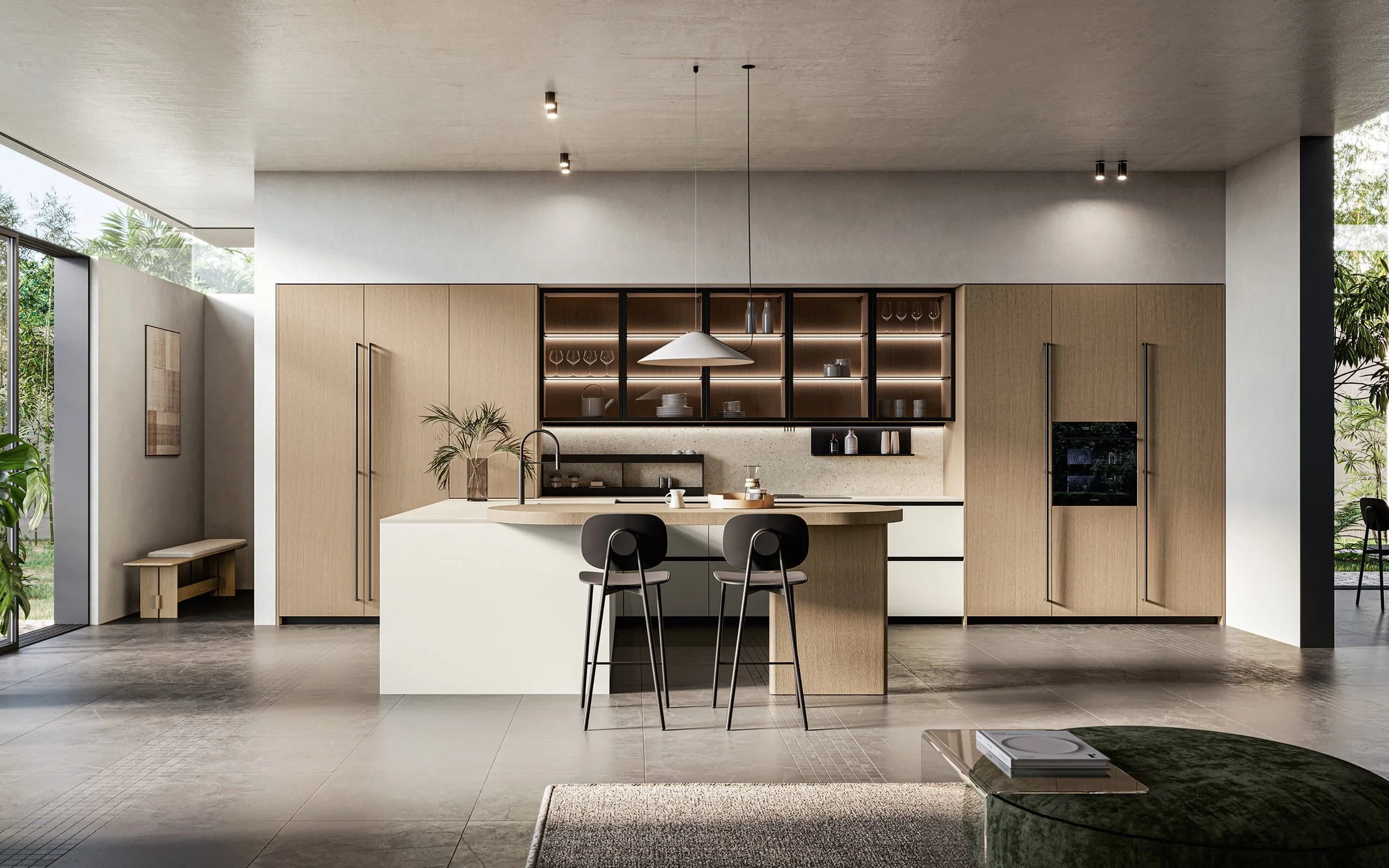
Spacious and Light
Japandi kitchens are never overcrowded. Clear worktops, clever storage and thoughtful layouts help create a sense of space, even in smaller rooms. Light plays a huge role too, with layouts designed to maximise natural daylight wherever possible.
Large windows, open plan living and simple lighting schemes all help the kitchen feel airy and calm, rather than busy or overdesigned. It is about letting the space breathe.
Neutral Colour Schemes
Think warm whites, muted beiges and earthy tones that create a peaceful backdrop. These neutral palettes are then layered with subtle contrasts.
The key is restraint. Nothing too bold, nothing too glossy, just beautifully balanced tones that feel harmonious and timeless.
Bring in natural materials
Natural materials are at the heart of Japandi design. Kitchens in this style celebrate texture and authenticity, choosing materials that age gracefully and feel good to the touch.
Wood is a staple, whether that is timber cabinetry, open shelving or subtle cladding. Stone, marble and quartz add quiet luxury to worktops and splashbacks, while woven textures like wicker or rattan can soften the look through seating or lighting. Bamboo, wool and other natural fibres bring warmth and tactility without visual clutter.
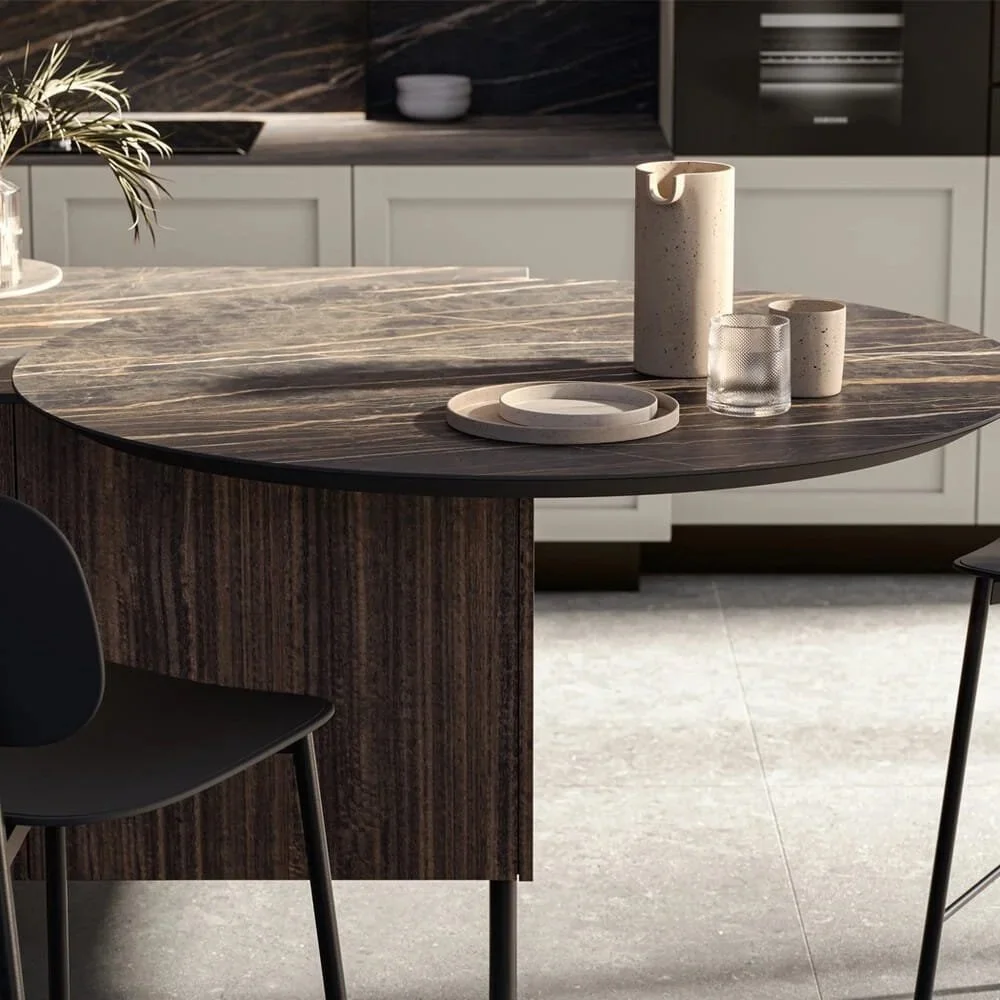
Bringing the outside in
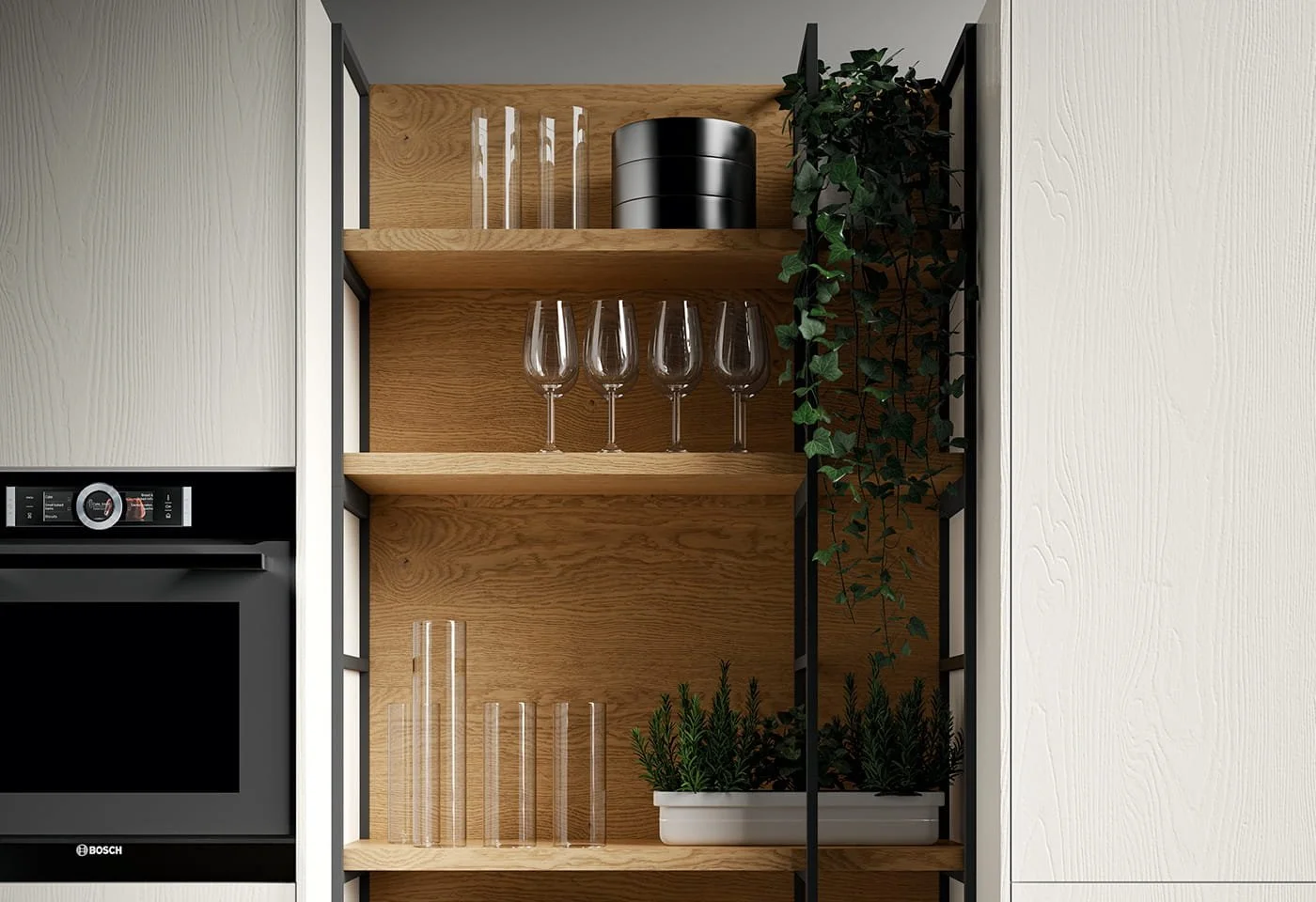
Japandi kitchens often blur the line between indoors and outdoors. Large windows, garden views and natural light help connect the space to its surroundings, while indoor plants add life and softness.
Herbs on open shelves, leafy greenery on worktops or a simple branch in a ceramic vase all reinforce that connection to nature. It is not about filling the space, but choosing a few thoughtful elements that feel intentional.
Simplicity and minimalism that still feels warm
Minimalism does not have to feel cold, and Japandi proves it. Clean lines, handleless cabinetry and uncluttered surfaces keep the kitchen feeling calm, while warm materials and soft lighting stop it from feeling stark.
Every element has a purpose. Storage is discreet, layouts are intuitive, and decorative details are chosen carefully. It is a style that values function just as highly as form.
Is a Japandi kitchen right for you?
If you are drawn to calm interiors, natural textures and a kitchen that feels like a retreat from busy everyday life, Japandi design could be a perfect fit. It suits both contemporary homes and period properties, adapting beautifully to different spaces while remaining quietly confident.
At Ray Munn Kitchens, we design Japandi kitchens that are tailored to how you live, combining thoughtful design with exceptional craftsmanship. The result is a kitchen that feels timeless, peaceful and genuinely enjoyable to spend time in.
If you would like to explore Japandi kitchen design for your own home, our team would love to help you bring that vision to life. Just get in touch.